

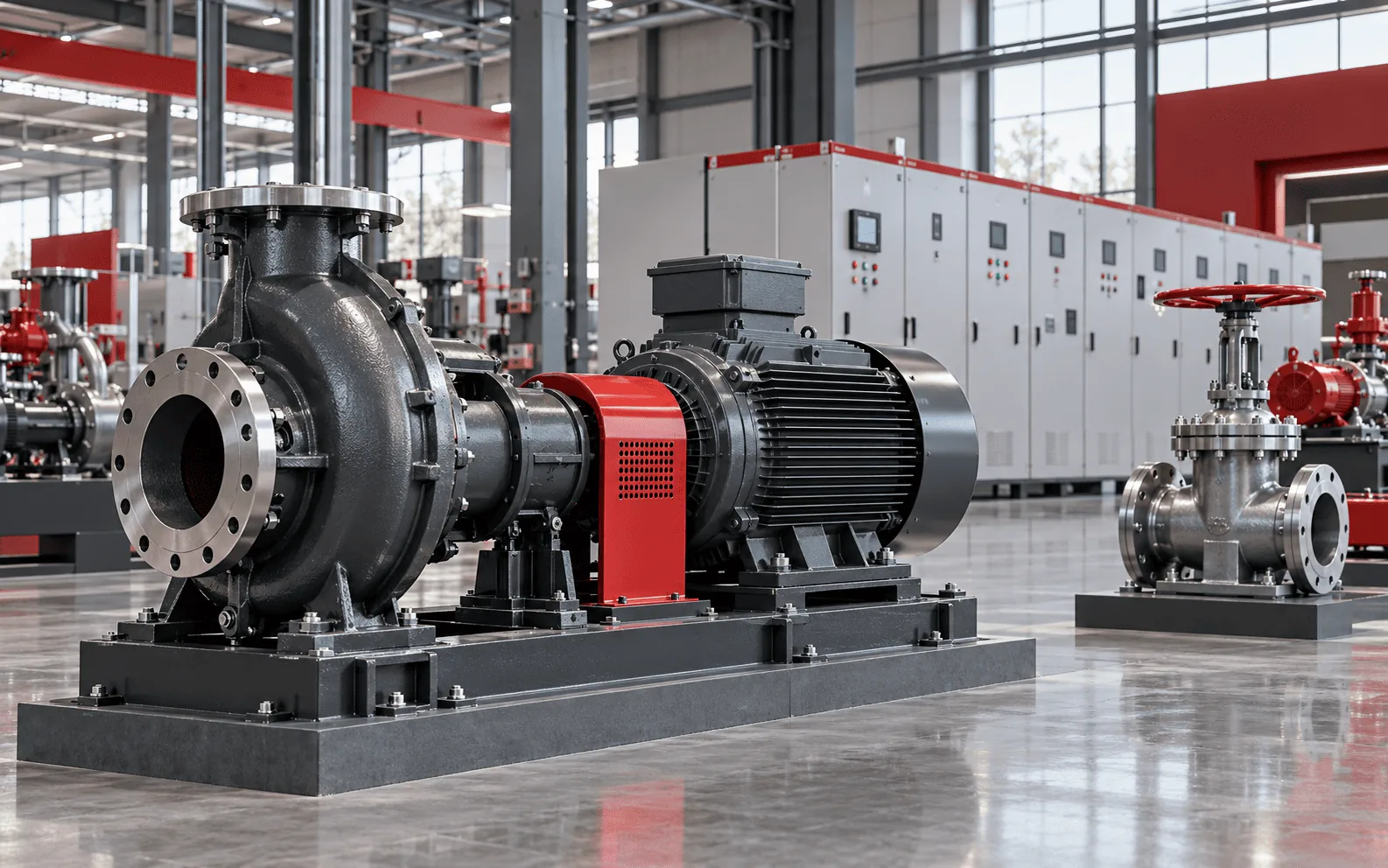
Fire protection is not a single product. It is a system of water supply, pumps, pipework, sprinklers or hydrants, detection and alarms that must work together on the worst day. A well planned fire fighting installation protects people first, then the building, stock and production. This guide explains the main parts and how a project normally runs from design to handover.
The main parts of a fire protection system
Fire water supply and fire pump set
Everything starts with a reliable water source: a dedicated fire tank, a reservoir or a mains connection with enough pressure and flow. A fire pump set normally includes a main pump, a jockey pump that keeps the pipework under pressure, and a controller. Many systems add a diesel-driven pump so that protection continues if mains power fails. Pump selection follows the flow and pressure the system needs, which comes from the hazard classification of the building.
Automatic sprinkler systems
Sprinklers react to heat and discharge water over the fire area. A wet-pipe system holds water in the pipes and is the most common choice. Dry, pre-action and deluge systems are used in cold stores, data rooms and high-hazard areas where the pipes must not hold water or where the whole area must flood quickly. Sprinkler layout depends on the ceiling height, storage type and the hazard class.
Fire hydrants, hose reels and landing valves
Hydrant networks provide water to the fire service around a site. Hose reels give staff first-aid fire fighting capability inside the building, and landing valves in risers serve upper floors. Underground ring mains are usually used on larger sites so that a single pipe break does not cut off supply.
Detection, alarm and special suppression
Smoke and heat detectors, manual call points and sounders form the alarm side. Where water is unsuitable, for example in electrical rooms and switchgear rooms, gas or aerosol suppression systems are used. Foam systems protect fuel and chemical storage.
Standards and approvals
Designs are usually based on a recognised standard such as the NFPA series (for example NFPA 13 for sprinklers, NFPA 14 for standpipes, NFPA 20 for fire pumps and NFPA 72 for alarms) or the local civil defence code of the country. The authority having jurisdiction may require drawings to be approved before work starts and an inspection before handover. We work to the standard your project or authority specifies.
How a fire fighting installation project runs
- Survey and hazard assessment of the building, storage heights, occupancy and available water.
- Design of the pump room, pipe routing, sprinkler layout and hydrant locations, with hydraulic calculations.
- Approval of drawings with the client, consultant or authority.
- Supply of pumps, valves, pipe, sprinklers, hydrants and panels.
- Installation with painting or coating, supports, penetrations sealed and coordination with other trades.
- Testing and commissioning: hydrostatic pressure tests, flushing, pump performance tests, alarm and valve supervision checks.
- Handover with as-built drawings, operating instructions and a maintenance plan.
Why maintenance matters
A system that was never tested is a system nobody can trust. Pumps should be run on a schedule, valves kept open and tamper-checked, strainers cleaned, tanks checked and sprinklers protected from damage and paint. A simple written routine does more for safety than any single upgrade.
Fire fighting supply and installation, wherever your site is
We supply and install fire fighting systems and can source fire pumps, valves, hose equipment and related products for projects abroad. Send us your building plans or a site description, the standard to follow and the delivery location, and we will quote the design, supply and installation scope.
See our fire fighting installation services or send us your requirement.
Comments
No comments yet. Be the first to share your thoughts.