

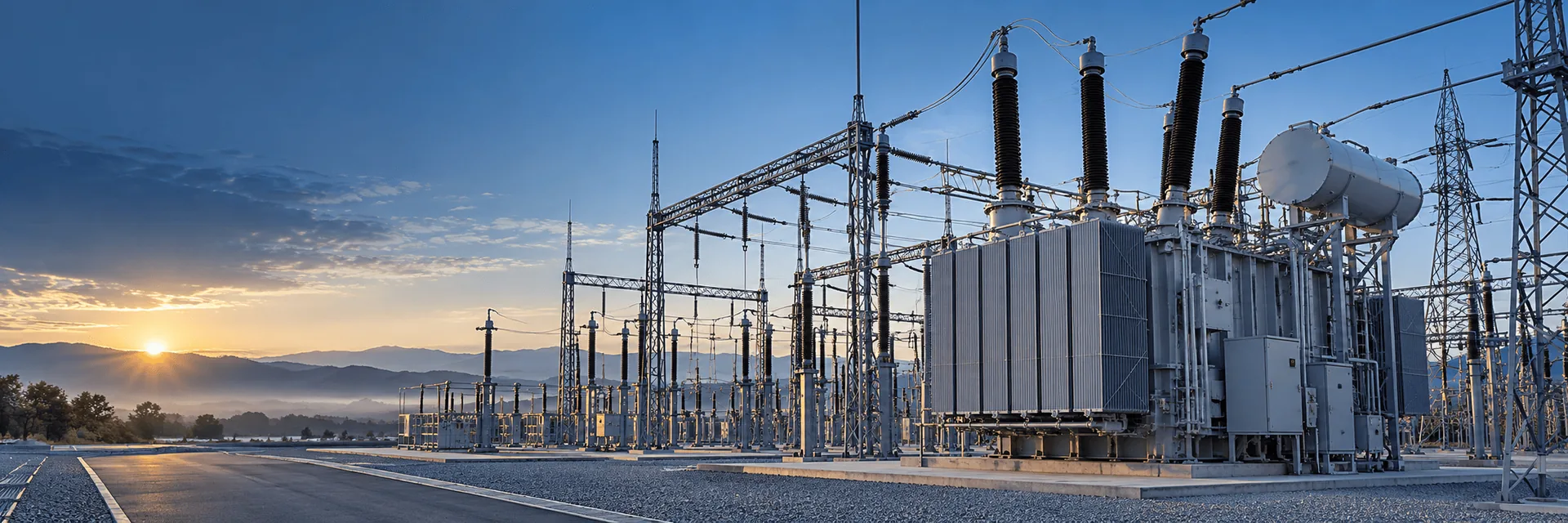
A substation is only as reliable as its weakest piece of equipment and its poorest installation. Whether you are building a new factory supply, extending a utility network or replacing ageing plant, the same questions come up: which transformer, which switchgear, how is it installed and how is it proved safe before it is energised. This guide walks through the main items, in plain terms, for buyers, project engineers and contractors.
Power and distribution transformers
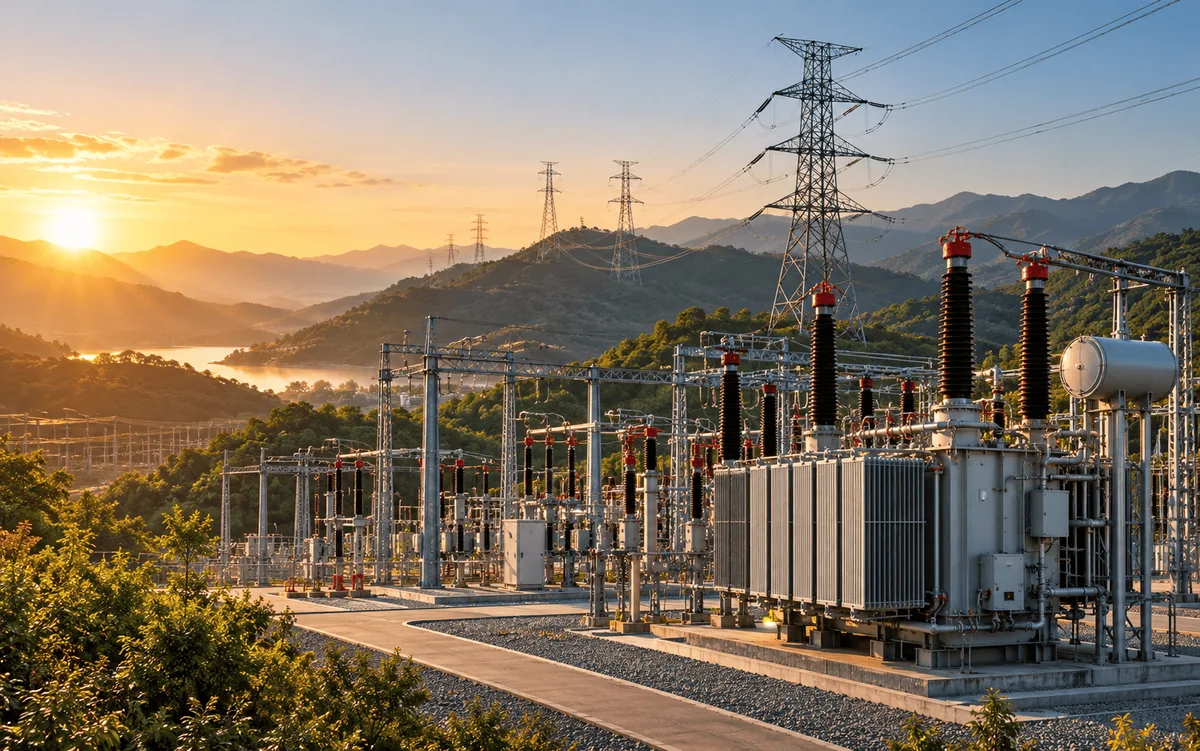
Transformers change voltage so that power can travel efficiently and be used safely. Distribution transformers (typically 11/0.4 kV) feed factories, buildings and commercial loads; power transformers (33 kV and above) sit in primary and grid substations. Dry-type and cast-resin units suit indoor rooms and buildings, while oil-immersed units are used outdoors and at higher ratings.
When you request a quotation, give us the rating in kVA or MVA, the primary and secondary voltage, vector group, cooling method, tap changer type, impedance and the site conditions such as altitude, ambient temperature and whether the unit is indoors or outdoors.
Installation and pre-commissioning checks
- Foundation, oil pit and fire barrier built to the drawing before the unit arrives.
- Unloading and positioning with the correct lifting points, and a check of the impact recorder if one is fitted.
- Fitting of bushings, radiators, conservator, Buchholz relay and breather, then oil filling under vacuum where the maker requires it.
- Insulation resistance, turns ratio, winding resistance and vector group tests, with oil sample tests on oil-filled units.
- Earthing of tank, neutral and surge arresters, and a check of all protection settings.
Medium and high voltage switchgear
Switchgear switches, protects and isolates the network. Low voltage boards, medium voltage panels (typically 3.3 to 36 kV) and high voltage gear each have their own construction. Air-insulated switchgear is simple and easy to inspect. Gas-insulated and vacuum-based designs are compact and need less space, which matters in cities, buildings and offshore or industrial sites.
Ring main units (RMUs) are a compact form of switchgear used on 11 kV and 33 kV distribution loops to feed transformers. They are common in housing, commercial and industrial projects because they are small, enclosed and quick to install.
Installation points that are often missed
- Cable trench and gland plate dimensions, checked against the panel drawing, not after delivery.
- Level and fixing of the panel base frame, since a twisted frame makes the doors and shutters bind.
- Busbar joint torque and cable termination quality, which are the most common sources of later heating faults.
- Primary injection and secondary injection tests on protection, plus interlock and trip tests on every breaker.
SF6 gas-insulated equipment: what to know
Sulphur hexafluoride (SF6) is an excellent insulating and arc-quenching gas, which is why it is used in compact gas-insulated switchgear (GIS), ring main units and some circuit breakers. It is also a powerful greenhouse gas, so handling, leak tightness and recovery matter both for safety and for the environment.
- Gas is supplied and handled by trained staff using proper recovery and filling equipment, never vented.
- Gas density or pressure monitoring is checked and the alarm and lock-out levels are tested on site.
- Gas compartments are checked for leaks after assembly, and the moisture content of the gas is measured before energising.
- Rooms with SF6 equipment need good ventilation at floor level, because the gas is heavier than air.
Alternatives that do not use SF6 are now offered by several manufacturers. If your project has an environmental requirement, tell us and we will quote both options.
Insulators for overhead lines and substations
Insulators hold live conductors away from towers, poles and structures. The main types are porcelain, toughened glass and composite (polymer) insulators. Porcelain and glass have a long record in service. Composite insulators are lighter, easier to handle and often perform better in polluted or coastal areas because the surface sheds water.
Choosing the right insulator depends on system voltage, mechanical load, and the pollution level at the site. Heavy pollution or salt fog needs a longer creepage distance, which means more or longer sheds. Share the line voltage, span, conductor type and site conditions and we will match the string or post insulator to them.
Supply, design and installation, anywhere
Delta Engineering China sources transformers, switchgear, RMUs, SF6 equipment and insulators from established manufacturers, and can arrange design support, shipping, installation supervision and commissioning support for projects in different countries. Tell us the one-line diagram, ratings, standards and delivery site, and we will come back with a quotation specified to your requirement.
Browse the transformer, switchgear, RMU and insulator catalogue, or contact our team with your specification.
Comments
No comments yet. Be the first to share your thoughts.